$35 DIY Solar Can Air Heater - Emergency Heat Blueprint
When the power goes out in winter, what heats your room?
Not a furnace that needs the grid. Not a space heater that needs an outlet. Not fuel you have to buy, store, or run out of.
This is a box you build from trash that turns free winter sunlight into hot air — 28°F in, 141°F out in the demonstration. No gas. No mains wiring. No permits for the low-voltage fan as shown. Just physics.
How it works
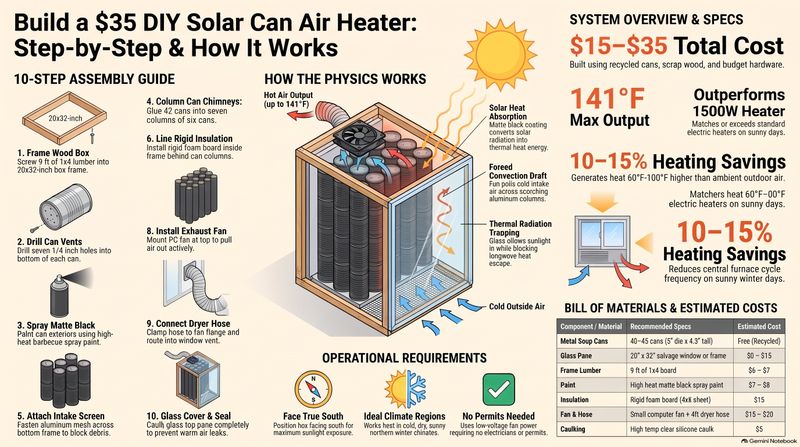
Sunlight passes through the glass cover and hits 42 soup cans painted matte black. The black cans absorb the heat. Cold outside air comes in the bottom, rises through the can columns, and a small fan pulls the hot air out the top through a dryer hose into your window. Glass traps the long-wave heat inside while the sun keeps coming in.
What you get
This heats air only. It does not heat water, store power, or tie into household wiring. It works in direct sun, in the daytime. On cloudy days or at night, output drops. It is supplemental, emergency, and off-grid heat for a room — it does not replace a furnace.
Who this is for
How hot does it really get? In the demonstration, 28°F outside air came out at 141°F. Your results depend on sun, angle, sealing, and climate.
What does it cost to build? $15–$35 in materials using recycled cans, scrap wood, and budget hardware. Cans are free.
Does it need power? Only a small low-voltage fan — a repurposed laptop fan on a 9V wall wart in the demo. The heat itself comes from the sun.
Is it safe? Follow the safety sheet: high-heat paint outdoors, gloves for hot surfaces and glass, keep the exhaust clear, never block intake or exhaust in full sun.
Build it before you need it. When the cold comes, the sun is still free.
Not a furnace that needs the grid. Not a space heater that needs an outlet. Not fuel you have to buy, store, or run out of.
This is a box you build from trash that turns free winter sunlight into hot air — 28°F in, 141°F out in the demonstration. No gas. No mains wiring. No permits for the low-voltage fan as shown. Just physics.
How it works
Sunlight passes through the glass cover and hits 42 soup cans painted matte black. The black cans absorb the heat. Cold outside air comes in the bottom, rises through the can columns, and a small fan pulls the hot air out the top through a dryer hose into your window. Glass traps the long-wave heat inside while the sun keeps coming in.
What you get
- 15-page blueprint PDF — full build diagrams, frame, foam, can drilling, sealing, fan, and placement
- Step-by-step infographic — the 10-step assembly guide and bill of materials on one page
- Quick-start and safety sheet — the build in short form, plus what can go wrong
- Personal use license
- Frame: 9 ft of 1x4 lumber into a 20 x 32-inch box
- Core: 42 cans, 7 columns of 6, seven 1/4-inch vent holes in each can bottom
- Coating: high-heat matte black paint rated to 1000°F
- Insulation: rigid foam board — never cardboard, which warps, soaks, and burns
- Fan: PC fan at the top, PULLING air out — blowing inward stalls flow to zero
- Seal: silicone every joint — a 1mm gap lets cold air bypass the heater
- Place: tilt up, face true south, cold dry sunny winter climates work best
This heats air only. It does not heat water, store power, or tie into household wiring. It works in direct sun, in the daytime. On cloudy days or at night, output drops. It is supplemental, emergency, and off-grid heat for a room — it does not replace a furnace.
Who this is for
- Anyone who wants heat that works when the grid does not
- Off-grid cabins, shops, greenhouses, and winter preppers
- Homeowners who want to cut furnace cycles on sunny winter days
How hot does it really get? In the demonstration, 28°F outside air came out at 141°F. Your results depend on sun, angle, sealing, and climate.
What does it cost to build? $15–$35 in materials using recycled cans, scrap wood, and budget hardware. Cans are free.
Does it need power? Only a small low-voltage fan — a repurposed laptop fan on a 9V wall wart in the demo. The heat itself comes from the sun.
Is it safe? Follow the safety sheet: high-heat paint outdoors, gloves for hot surfaces and glass, keep the exhaust clear, never block intake or exhaust in full sun.
Build it before you need it. When the cold comes, the sun is still free.